Precision at the
cellular level.
Biology does the targeting.
BNCT has been researched since the 1930s and practiced continuously in Japan since the 1970s. This page covers the mechanism, the clinical data, and how you can contribute to the European standard.
Boron Neutron Capture Therapy (BNCT) is based on the special property of the non radioactive isotope boron-10 to capture neutrons, thereby triggering a nuclear reaction whose effect is limited to a single cell. BNCT therefore requires two independent components: a neutron beam directed at the body from outside and a drug containing boron-10 that specifically accumulates in the tumor cells. Each component alone is ineffective; only the combination can be used for treatment.
The mechanism
Three steps. One principle. Extraordinary precision.
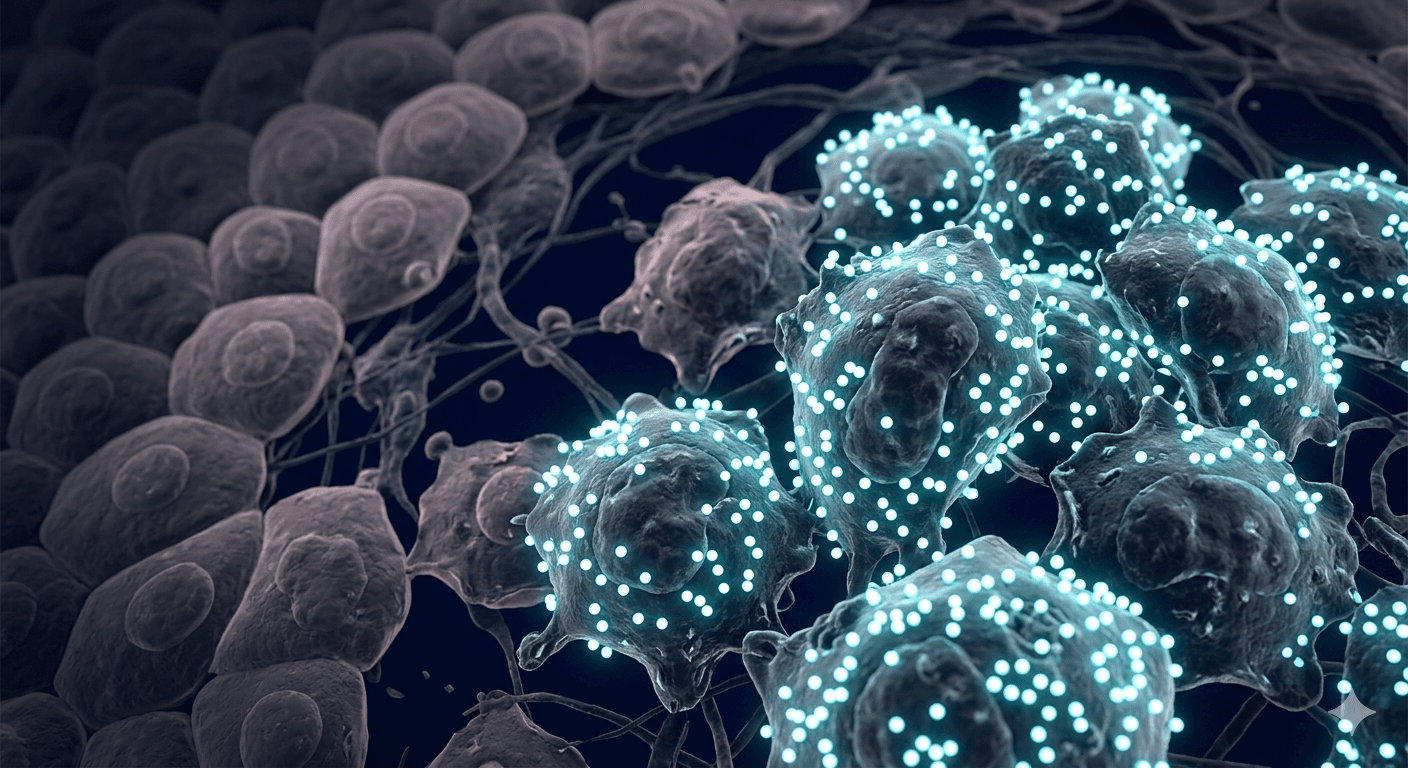
Boron loading
Boronophenylalanine (BPA) is administered intravenously. Cancer cells accumulate the compound preferentially. Normal cells absorb minimal amounts. Biology does the targeting, not the physician.
BPA (Steboronine®) is approved and fully reimbursed in Japan since May 2020.
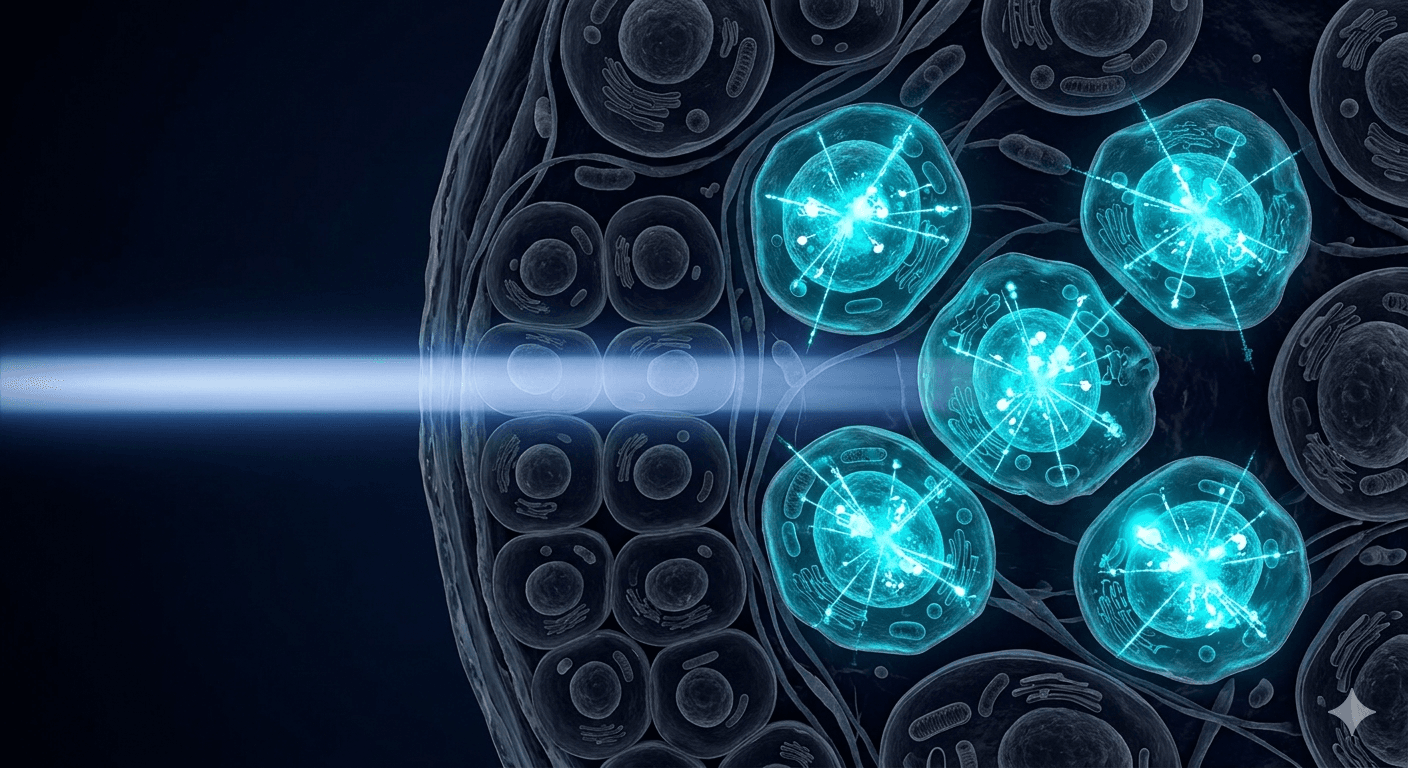
Neutron irradiation
A low-energy epithermal neutron beam is directed at the tumor region. The beam itself causes minimal biological damage to normal tissue. The reaction occurs only where boron is concentrated.
The accelerator fits in any hospital. No nuclear reactor required.
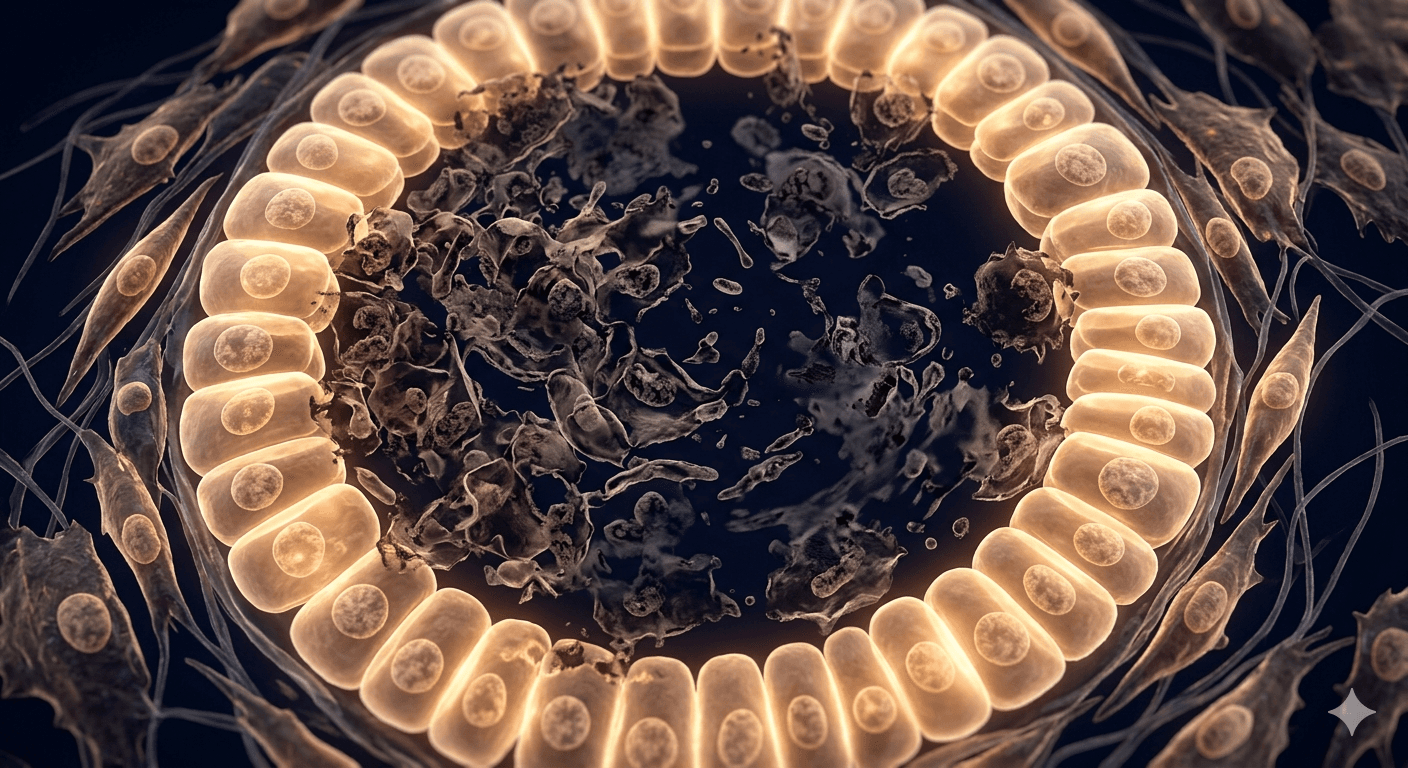
Selective destruction
The neutron-boron reaction releases high-LET alpha particles and lithium ions with a combined range of approximately one cell diameter. Each boron-loaded cancer cell is destroyed from within. Normal cells are spared.
One treatment session. No weeks-long treatment phases.
The data exists.
It needs to be scaled.
A substantial body of clinical evidence has been gathered, primarily in Japan. The challenge is not the science \u2014 it is the absence of large-scale, well-designed multicenter trials. This is what BNCT Global exists to deliver.
| Indication | Key result | Comparator | Source | Sessions |
|---|---|---|---|---|
| Head and neck (recurrent) | 45% complete response | 53% OS at 2 years | Kankaanranta et al. IJROBP 2012 | 1 |
| Head and neck (recurrent) | Median survival 13.6 months | vs 7.4 months conventional | Koivunoro et al. 2019 | 1 |
| Glioblastoma (newly diagnosed) | Phase II: safety established | Comparable to standard of care | Kawabata et al. 2011 | 1 |
| Malignant melanoma | High local control rate | Melanoma-seeking compound | Mishima et al. 1989 | 1 |
All studies used BPA or BSH as boron compound. Japan approved and reimburses BPA (Steboronine\u00ae) for head and neck cancer since May 20th, 2020. Full publication list available on request.
We are building the European
clinical standard. Together.
BNCT Global is coordinating the multinational clinical trials required for European reimbursement. We are looking for radiation oncologists, medical physicists, and research institutions to join the protocol development team.
- Radiation oncologists with experience in head and neck or brain tumors
- Medical physicists with dosimetry expertise
- Academic medical centers interested in hosting a Therapy Center
- Clinical researchers interested in BNCT protocol development
Interested in contributing?
Prof. Sauerwein reviews all clinical partnership enquiries personally.
Contact Prof. SauerweinPublications
Written by the people building it.
Book
Neutron Capture Therapy: Principles and Applications
2nd Edition, Springer, 2025
Wolfgang A. G. Sauerwein, Andrea Wittig, Raymond L. Moss, Yoshinobu Nakagawa, Koji Ono (Eds.)
The standard multidisciplinary reference on neutron capture therapy, written by the most experienced specialists in the field.
View on SpringerArticle
Quantification of 10B and 11B in Biological Samples in Translational Science and Clinical Applications for BNCT
Medicinal Research Reviews, 2026
Christoph Selg, Wolfgang A. G. Sauerwein, Evamarie Hey-Hawkins
Selected as the issue cover by the journal. Co-authored with advisory board member Evamarie Hey-Hawkins.
Read at Wiley